The best small lens for the LUMIX S9
The S9 is Panasonic's most compact full-frame body — its whole appeal is a pocketable camera you actually carry. Bolt on a big zoom and you throw that away. Here are the small L-mount lenses that keep it tiny, from the 58-gram pancake to the primes owners never take off.

The best small everyday lens for the S9 is now the new Lumix S 40mm F2 — a native, 144g f/2 prime for about $400 — with the Sigma 45mm F2.8 the close alternative. For the tiniest kit with autofocus, the new Viltrox AF 28mm F4.5 "Chip" is a 60g pancake for just $99; if you want the absolute thinnest and don't mind manual focus, the Lumix S 26mm F8 (58g) still wins on size alone. For one-lens versatility, the Lumix S 18-40mm F4.5-6.3 is the smallest autofocus full-frame zoom made (155g). Want a small wide prime? The new Lumix S 20mm F2.5 (142g, about $499, shipping October) pairs with the 40mm F2 for a two-lens kit under 300g. On a budget, Viltrox's new Air series puts four autofocus L-mount primes under 205g at $168–199.
Prices below are approximate and move around; treat weight, focal length and autofocus as the stable facts.
Some lens links below are Amazon affiliate links. If you buy through them, LumiLUTs may earn a small commission, at no extra cost to you.
Amazon affiliate links. As an Amazon Associate, LumiLUTs earns from qualifying purchases, at no extra cost to you.
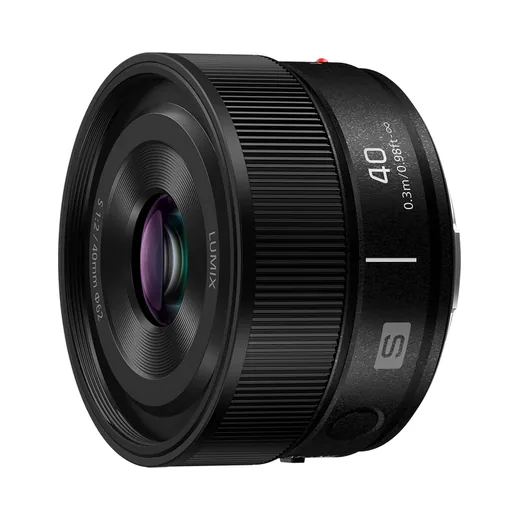
Native, bright and pocketable. If you buy one lens for the S9, buy this.
Check price on Amazon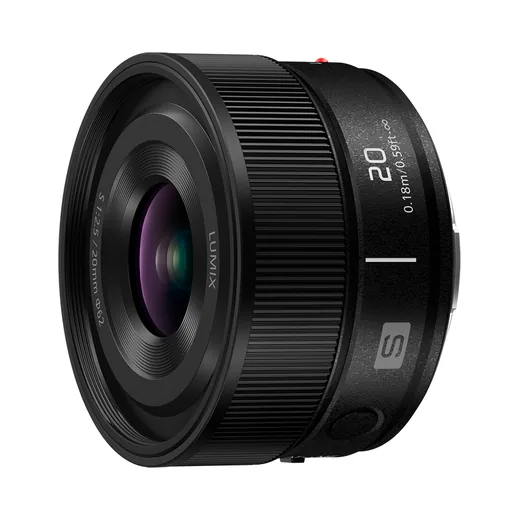
The 40mm's wide partner, on the same 62mm filters. Ships from October.
Check availability on Amazon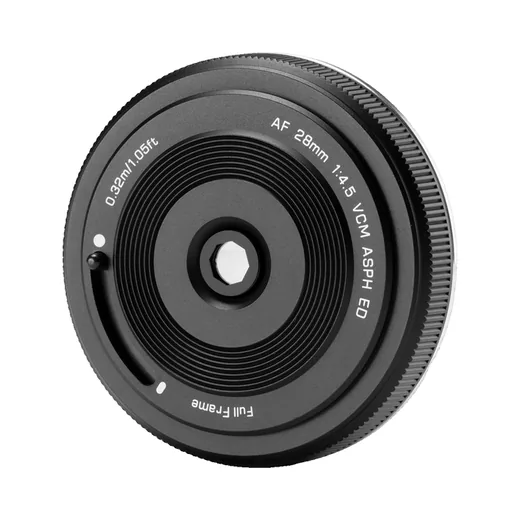
A 60 g autofocus pancake that keeps the S9 truly pocketable.
Check price on AmazonWhy the S9 wants a small lens
The S9 packs a full-frame sensor and in-body stabilisation into a body barely larger than an APS-C compact. That balance is the point. A heavy 24-70mm f/2.8 technically mounts, but it turns a grab-and-go camera into a front-heavy club that lives in a bag instead of on your shoulder. The lenses below were chosen for size and weight first, then image quality and autofocus — the order that actually matters for an S9.
Size and weight, at a glance
On a body this small, every gram shows. Here's the field, lightest to heaviest. The top four each weigh under 150 g.
Highlighted rows are the true pocket lenses. Even the heaviest here is lighter than most 24-70mm f/2.8 zooms.
The picks
Lumix S 26mm F8 (pancake)
The thinnest full-frame lens made — an "always-on body cap" that makes the S9 genuinely pocketable. Manual focus with peaking, and the fixed f/8 wants good light or a higher ISO. Pure size play.
Viltrox AF 28mm F4.5 "Chip"
The tiny lens the S9 was waiting for: a 60g, 13mm-thin autofocus pancake for $99. Brighter and far more usable than the manual 26mm f/8, and absurdly cheap. Fixed f/4.5 and autofocus-only (no manual ring), but as a grab-and-go body cap it's hard to beat.
Lumix S 40mm F2
Panasonic's newest small prime and the best everyday choice for the S9: a native, pocketable 144g lens with a bright f/2 for real subject separation, sharing the 62mm filter thread with the 18-40mm. Lighter, brighter and cheaper than the Sigma 45. Viltrox's new 40mm F2.5 Air undercuts it at about $168 for a similar size, so buy this one for the brighter f/2, the weather sealing and native autofocus rather than on price. Still the lens we would buy first.
Lumix S 20mm F2.5
Panasonic's new wide partner for the 40mm F2, made with the S9 in mind. At 142g it is under half the weight of the Lumix F1.8 primes, dust and splash resistant, and shares the 62mm filter thread with the 40mm and 18-40mm. Focuses to 18cm, with focus breathing suppression for video. About a stop slower than f/1.8, so buy it for size, not low light.
Viltrox AF Air series
Viltrox brought its whole budget Air line to L-mount in September 2026: four autofocus primes, none heavier than 205g, none over $199. The AF 40mm F2.5 Air is the one to notice, because at 169g and about $168 it covers the same ground as the Lumix S 40mm F2 for well under half the price. You give up two thirds of a stop, weather sealing and Panasonic's own autofocus tuning, and these are brand new in L-mount so firmware support over time is still unproven. For a second or third focal length, that trade is an easy one.
Sigma 45mm F2.8 DG | C
The long-time S9 favourite: all-metal, autofocus, beautifully rendered. Still a superb everyday prime — the new Lumix 40mm F2 undercuts it on weight and aperture.
Lumix S 18-40mm F4.5-6.3
The smallest, lightest autofocus full-frame zoom on the market, with a weather-resistant metal barrel. Ultra-wide to standard covers most of what you shoot. The slow variable aperture is the only trade-off.
Sigma i-series compact primes
A whole family of all-metal autofocus primes with a matched footprint — from the tiny 24 F3.5 and 45 F2.8 to the faster f/2 line (20, 24, 35, 50, 65). Pick focal lengths, not systems; a 24 and a 45 make a two-lens kit that lives in a jacket pocket.
Lumix S F1.8 prime family
Panasonic's five matched f/1.8 primes share a size, filter thread and centre of gravity, so they swap without rebalancing — handy on a gimbal. Bigger than the i-series, but a full stop faster and a tidy native set.
Lumix S 20-60mm F3.5-5.6
The practical value kit zoom, with a usefully wide 20mm end most kit lenses don't reach. Not the smallest here, but the cheapest way to a flexible everyday range.
Lumix S 28-200mm F4-7.1 Macro O.I.S.
A remarkably compact superzoom with macro — one lens that does wide, portrait and reach for travel days when you don't want to change glass. Give up some aperture for the range.
Sigma 28-70mm F2.8 DG DN | C
The "if you can go slightly bigger" upgrade: a constant f/2.8 standard zoom in the smallest package of its class. The one zoom for low light and a bit of blur without a bag full of primes.
Quick comparison
| Lens | Type | Aperture | Focus | Weight | Best for | Buy |
|---|---|---|---|---|---|---|
| Viltrox AF 28mm F4.5 | Prime | f/4.5 | Auto | 60 g | Smallest AF, ~$99 | Check price |
| Lumix S 26mm F8 | Prime | f/8 fixed | Manual | 58 g | Thinnest, daylight street | Check price |
| Lumix S 40mm F2 | Prime | f/2 | Auto | 144 g | Best everyday prime | Check price |
| Lumix S 20mm F2.5 | Prime | f/2.5 | Auto | 142 g | Small wide, ships late Oct | Availability |
| Viltrox AF Air series | Primes | f/2–f/4 | Auto | 159–205 g | Budget AF primes, $168–199 | Check price |
| Sigma 45mm F2.8 DG | Prime | f/2.8 | Auto | 215 g | Everyday alternative | Check price |
| Lumix S 18-40mm | Zoom | f/4.5–6.3 | Auto | 155 g | Smallest AF zoom, travel | Check price |
| Sigma i-series primes | Primes | f/2–f/4 | Auto | 215–405 g | Matched prime kit | See options |
| Lumix S F1.8 primes | Primes | f/1.8 | Auto | ~300–355 g | Fast matched native set | See options |
| Lumix S 20-60mm | Zoom | f/3.5–5.6 | Auto | ~350 g | Budget all-rounder | Check price |
| Lumix S 28-200mm | Zoom | f/4–7.1 | Auto | ~413 g | Travel superzoom | Check price |
| Sigma 28-70mm F2.8 | Zoom | f/2.8 | Auto | 470 g | Low-light versatility | Check price |
Weights, apertures and focal lengths are from each manufacturer's published specifications; prices are approximate list prices. Lumix S 20mm F2.5 figures are from Panasonic's September 2026 announcement; Viltrox Air series figures are from Viltrox's September 2026 L-mount launch.
L-mount has more glass than people think
The most common worry about buying a LUMIX body is that lens choice is thin next to Sony or Canon. That was a fair worry a few years ago. It is out of date now.
L-mount is an alliance rather than one manufacturer's mount. Leica, Panasonic and Sigma founded it in 2018, and eight more companies have joined since: Leitz Cine, DJI, Astrodesign, Samyang, Blackmagic Design, Sirui, Viltrox and Freefly Systems. Viltrox joining in 2025 is exactly why four of its Air primes landed on the mount in September 2026. Outside the alliance, 7Artisans, TTArtisan, AstrHori and Meike make L-mount lenses too.
What that means in practice for an S9: Sigma alone covers most focal lengths natively with autofocus, from the compact i-series to the Art range, and the independents now undercut everyone on price. The gap that remains is the long and the exotic end, where Sony's catalogue is genuinely deeper. For the small primes and everyday zooms this camera is built around, choice is not the problem it is reputed to be.
How to choose
Want the smallest possible camera? The 26mm F8 pancake, no contest — pocketable, but manual focus and daylight-only.
Buying your first lens? The Lumix S 40mm F2 for a bright everyday prime, or the Lumix 18-40mm if you'd rather have zoom flexibility.
Want a small wide angle? The new Lumix S 20mm F2.5. Add the 40mm F2 and you have a 20 and a 40 that weigh under 300 g together and take the same 62mm filters.
One lens for travel? The 18-40mm for weight, the 28-200mm for reach.
Building a prime kit? Two Sigma i-series primes — a 24 and a 45, or a 35 and a 65 — cover most work in a jacket pocket.
Shooting in low light or video? The Sigma 28-70mm F2.8, or a fast prime like the Sigma 35mm F2 or Panasonic 50mm F1.8.
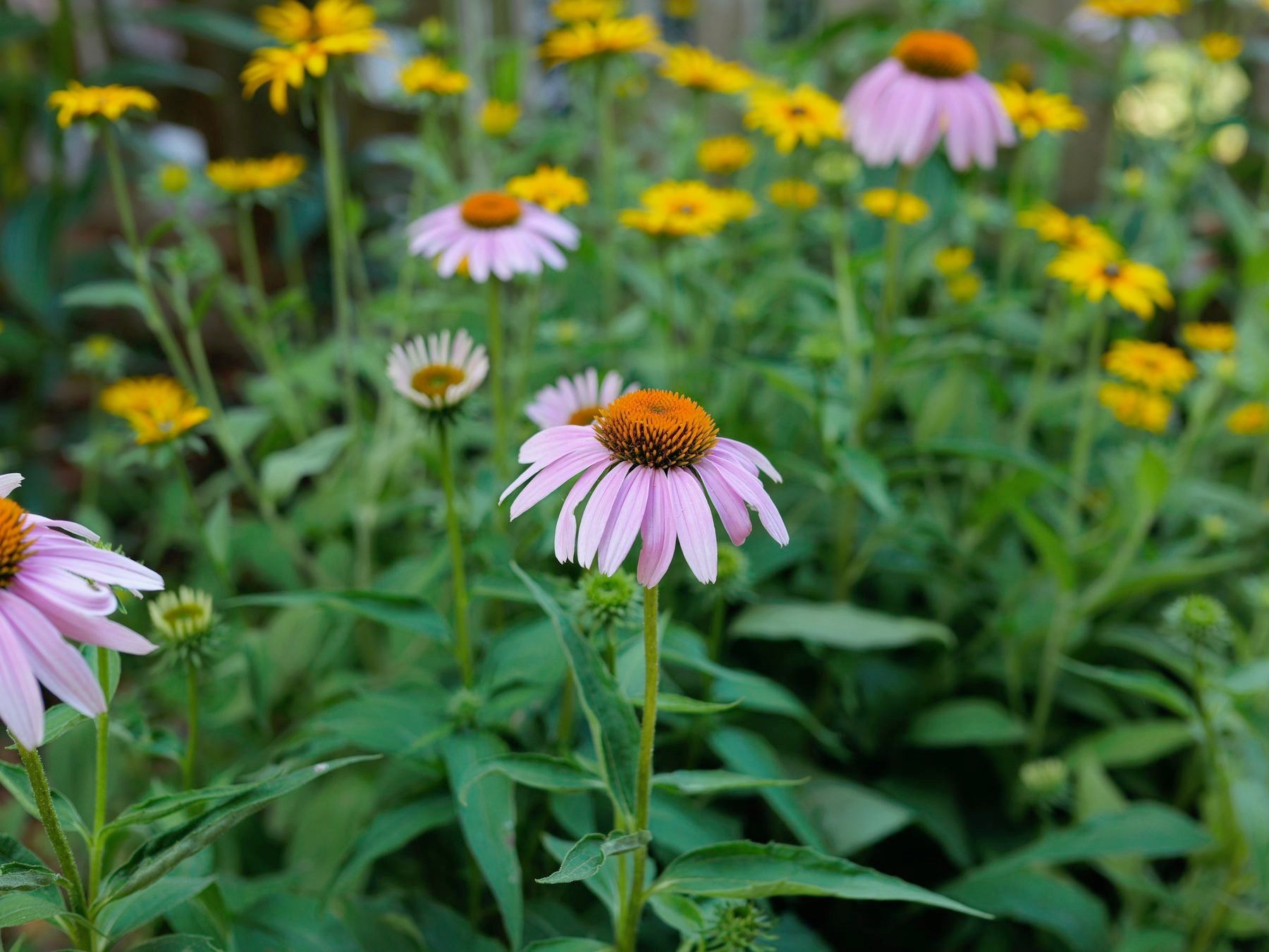
Deep blues, rich reds and vivid colour that pops, the rendering you reach for when you want the frame to carry itself.
A 33-point .cube plus the illustrated install guide. Instant download, yours forever, personal and commercial use.
Best small S9 lens FAQ
What is the smallest lens for the LUMIX S9?
The Lumix S 26mm F8 is the thinnest at 58g, but it is manual focus with a fixed f/8. For nearly the same size with autofocus, the new Viltrox AF 28mm F4.5 "Chip" is a 60g pancake for about $99 — the more practical "smallest lens" for most S9 owners.
What is the best small autofocus lens for the S9?
For a prime, the new Lumix S 40mm F2 (144g, f/2, native) is now the top pick, with the Sigma 45mm F2.8 close behind. For a zoom, the Lumix S 18-40mm F4.5-6.3 (155g) is the smallest and lightest autofocus full-frame zoom available.
Is the 26mm F8 pancake worth it?
For size and daylight street shooting, yes — it is the thinnest full-frame lens made. But it is manual focus only with a fixed f/8 aperture, so it struggles in low light. Many owners pair it with a Sigma i-series prime for everyday use.
What lens should I buy first for the S9?
For most people, the Lumix S 40mm F2 for a bright everyday prime, or the Lumix S 18-40mm compact zoom if you would rather have flexibility. Both are native, weigh around 150g and keep the S9 small and light.
What filter size does the Lumix S 20mm F2.5 use?
62mm, the same thread as the Lumix S 40mm F2 and the 18-40mm kit zoom, so one set of filters covers all three. For a full breakdown see 20mm F2.5 vs 40mm F2 vs 18mm F1.8.
Is the new Lumix S 20mm F2.5 good for the S9?
Yes, if you want a small wide angle. Announced in September 2026 and shipping from October at about $499, it weighs 142g, is dust and splash resistant, focuses as close as 18cm and uses the same 62mm filter thread as the 40mm F2 and 18-40mm. Paired with the 40mm F2 it makes a two-lens kit under 300g. It is about a stop slower than the Lumix F1.8 primes, so it suits daylight, travel and vlogging more than low light.
Can I use small third-party lenses on the S9?
Yes. The S9 uses the L-mount, so Sigma's compact i-series primes and DG DN zooms fit natively with full autofocus. Viltrox joined the L-Mount Alliance in 2025 and added four budget autofocus Air primes in September 2026, and Samyang has been a member since 2023. 7Artisans, TTArtisan, AstrHori and Meike make L-mount lenses as well. Sigma's APS-C 18-50mm F2.8 also works in the S9's crop mode.
Do these lenses work with the S9's Real Time LUT?
Yes. Real Time LUT is a colour profile the camera bakes into the JPEG as you shoot, independent of the lens — any L-mount lens works, and every look renders in-camera. See what a Real Time LUT is.
Keep going
New to the S9's colour tools? Start with what a Real Time LUT is, then see the best LUTs for the LUMIX S9 or grab a free LUMIX LUT to try in-camera film looks on your new lens. Chasing a specific film stock? Our film emulation hub maps the popular ones. Still kitting out the S9? See the best SD cards for the S9 or browse all guides.